You already know hydration matters—but vague advice like “drink eight glasses a day” rarely fits real life. When your schedule gets busy, water intake slips, and the result shows up fast: energy crashes, brain fog, reduced strength, and slower recovery. What you need isn’t another reminder. You need a daily hydration strategy that works automatically within your routine. This guide delivers a practical framework designed to optimize physical performance, mental clarity, and overall wellness. Built on proven health optimization principles, it gives you simple, sustainable systems that make staying hydrated effortless—so your body can consistently perform at its full potential.
The Science of “Why”: How Hydration Fuels Your Entire System
To enhance your all-day performance, it’s essential to implement effective hydration strategies that not only fuel your body but also support your well-being, a concept that aligns with the insights shared in our article on the Stages of Ozdikenosis.
First, let’s clear up a myth: thirst is not an early warning system. It’s a late alarm bell. By the time you feel thirsty, mild dehydration has already begun affecting cognitive performance, mood stability, and metabolic efficiency (National Academies of Sciences, 2019). That mid-afternoon brain fog? It’s often fluid loss, not laziness.
At the cellular level, water powers three non-negotiables:
- Nutrient transport – delivering vitamins, minerals, and glucose directly into cells.
- Temperature regulation – cooling you through sweat and circulation.
- Joint lubrication – reducing friction and supporting smooth movement.
Without adequate intake, even the best nutrition or strength plan underperforms (like putting premium fuel in a car with no oil).
Moreover, proper hydration directly supports steady blood volume, which helps prevent energy crashes and supports consistent productivity (Journal of Nutrition, 2012).
A structured daily hydration strategy isn’t optional—it’s foundational. Pro tip: start your morning with water before caffeine to stabilize energy early.
Building Your Hydration Habit: Four Actionable Daily Routines
Building a sustainable hydration habit isn’t about chugging a gallon at 9 p.m. (we’ve all tried). Instead, it’s about simple, repeatable cues that make water intake automatic. Here’s a practical, daily hydration strategy you can start today.
-
The Morning Kickstart
First, drink 16–20 oz of water immediately after waking. During sleep, your body loses fluids through respiration and sweat (about 0.5–1 liter overnight, according to the CDC). Rehydrating early supports circulation, digestion, and cognitive alertness. Think of it as turning the lights on in your metabolism before coffee even enters the chat. -
Habit Stacking with “Bookends”
Next, bookend every meal with a glass of water—one before and one after. This method uses habit stacking (pairing a new habit with an existing one) to create automatic triggers. Over three meals, that’s six glasses without extra mental effort. Pro tip: pour both glasses at once so you see your commitment upfront. -
The Visual Cue Method
Additionally, use a transparent, time-marked water bottle. These bottles display hourly targets, turning hydration into a visible scoreboard. Research in behavioral science shows visual cues increase follow-through by reducing decision fatigue (Clear, 2018). Watching the water line drop becomes oddly satisfying—like leveling up in a fitness app. -
Tech-Assisted Reminders
Finally, set recurring phone alarms or use a hydration app if you’re desk-bound. Consistent prompts combat “time blindness,” a common focus-related challenge. Small nudges, repeated daily, build lasting consistency.
Eating Your Water: Hydrating Foods and Beverages That Count

Last summer, I realized I was dragging through workouts despite carrying a giant water bottle everywhere. The fix wasn’t more chugging—it was smarter eating. Hydration isn’t just what you drink; it’s what you chew.
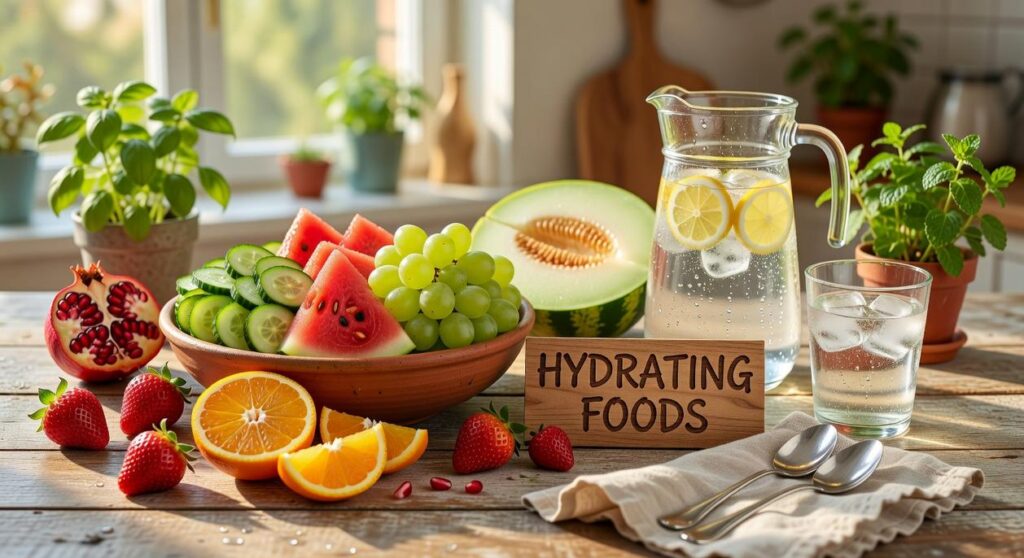
Top Hydrating Foods
- Cucumber (about 95% water, USDA): adds crunch and real fluid volume.
- Watermelon (around 92% water): replenishes fluids and potassium after sweaty sessions.
- Strawberries (about 91% water): naturally sweet and surprisingly hydrating.
- Celery: water-rich with electrolytes.
- Bell peppers: high water content plus vitamin C for recovery.
Because these foods contain structured water—water bound within plant cells—they release fluid gradually during digestion. In other words, they quietly support your daily hydration strategy without another refill.
Smarter Beverage Choices
Herbal teas, bone broth, and coconut water hydrate while offering antioxidants or electrolytes. On the other hand, sugary sodas can increase urine output and blood sugar swings, and excess alcohol suppresses antidiuretic hormone (which helps you retain fluid), leading to dehydration (National Institutes of Health).
The Truth About Coffee and Tea
Contrary to gym lore, moderate caffeine isn’t fully dehydrating. Research shows habitual coffee and tea drinkers still achieve net fluid gain (Mayo Clinic). So yes, your morning cup counts—just don’t treat it like water (nice try).
Performance Hydration: Fueling for Fitness and Activity
Hydration for exercise doesn’t have to be complicated. Think of it in THREE clear phases.
1) Pre-Workout (1–2 hours before)
Drink 16–20 oz of water. If your session will be intense, add a small pinch of salt. This tops off fluid levels so you’re not starting at a deficit (which is more common than people realize).
2) Intra-Workout (during training)
Sip 4–8 oz every 15–20 minutes. Small, steady sips beat chugging. For workouts over 60 minutes or in hot, humid weather, include ELECTROLYTES.
3) Post-Workout (recovery)
Rehydrate with 16–24 oz for every pound lost through sweat. Pair fluids with sodium to help your body actually retain what you drink.
Understanding Electrolytes
Electrolytes are minerals—like sodium and potassium—that carry an electric charge. They regulate muscle contractions and fluid balance. Without enough, cramps and fatigue can set in (yes, even if you drank water).
• Sodium helps retain fluid
• Potassium supports muscle function
They become critical during long or sweaty sessions.
DIY Electrolyte Drink
Mix:
• 16–20 oz water
• Pinch of sea salt
• Splash of lemon or lime
• 1 tsp honey or maple syrup
Simple. Effective. A smart addition to your daily hydration strategy.
Integrate Hydration, Elevate Your Life
You came here looking for a practical way to finally take control of your hydration—and now you have it. With the right routines and foundational knowledge, your daily hydration strategy no longer depends on willpower alone. The real struggle was never about remembering to drink water; it was about lacking a simple, repeatable system that fits into your life.
True health optimization starts with mastering the basics, and consistent hydration is one of the most powerful habits you can build. Don’t let low energy, brain fog, or inconsistent performance hold you back any longer. Choose one strategy—like the “Morning Kickstart”—and implement it tomorrow. Start small, build momentum, and take control of your hydration for good.