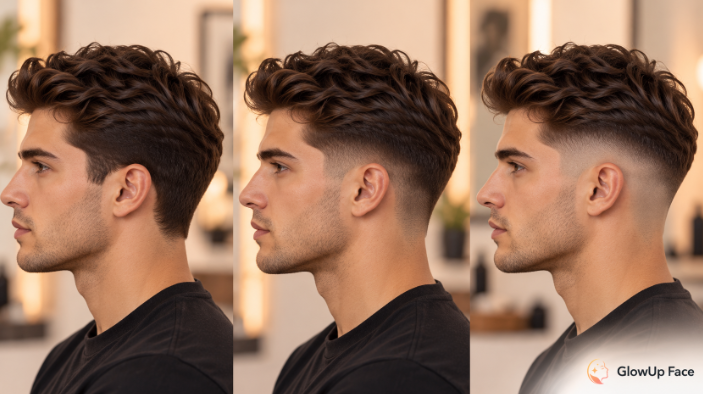
A saved haircut photo can hide several decisions inside one label. You may like the soft sides of a taper, the movement of a fringe and the outline of the person wearing it. Ask only for the haircut’s name, however, and your barber has to guess which of those details matters most.
To choose a taper haircut, decide how much side coverage to keep, where the blend should sit and how you want the top to behave. Face shape can help you describe an outline, but it should not overrule your hair’s growth pattern or the time you want to spend styling it.
Describe the blend before choosing a name
Low, mid and high are useful starting words, not a complete specification. Point to the area around the temples and ears in your reference. Explain where you want the shortest section to end and where you want fuller coverage to remain. Ask the barber to describe the same transition on your own head before cutting.
Also separate blend height from the shortest length. A low blend does not, by itself, tell someone whether you want exposed skin at the bottom or a little hair left. Say which finish you prefer. If you are unsure, ask to see the proposed starting length rather than choosing a guard number you have never worn.
The Wahl professional fading demonstration shows a cut built with several guards, lever positions and blending steps. That is why one number cannot describe the entire result. Use a photograph to communicate the shape and let the professional translate it into a cutting method.
Decide what the top needs to do
The sides and the top are separate choices that must work together. A forward fringe, a loose side part and an upright quiff can each sit above a tapered outline, but they ask different things of your morning routine. Describe the direction you want the hair to move, not simply whether it should look textured.
Notice how your hair falls after an ordinary wash and dry. Does the front naturally lift, separate or fall forward? Is there a section you keep forcing into place? Bring that information to the appointment. A reference with a similar growth pattern is a more useful starting point than an image chosen only because its subject has a similar face.
Ask what the proposed cut looks like without the photographer’s styling. You are buying the haircut you will wear on a workday, not only the finished version with carefully placed strands. Keep enough length for the styling options you actually want, and ask the barber to explain any trade-off before removing it.
Use face shape to form a question
A face-shape label can help you notice whether an outline looks longer, wider or more tapered toward the chin. It is not a rule that round faces need one cut or square faces must avoid another. You might prefer more height, a wider silhouette or a fringe regardless of the category.
For a visual starting point, GlowUpFace’s free face-shape finder estimates an outline from a front-facing photo and offers styling ideas. This particular tool processes the photo on your device without an account or email. Its categories are unvalidated styling heuristics, not measurements of attractiveness or guarantees of haircut suitability.
The distinction matters: Google’s Face Landmarker documentation describes locating facial landmarks; it does not prescribe a haircut. The styling decision still needs your preferences and a barber’s assessment. Use the result to ask, “Could we keep more width here?” rather than “What is the correct haircut for my category?”
Price the upkeep, not only the appointment
Write down what you are prepared to do between visits. Perhaps you want a quick comb-through, or you are happy to blow-dry and use a styling product. Be specific about the time, tools and return visits that fit your budget. There is no benefit in selecting a finish whose maintenance you already know you will skip.
Ask the barber how the outline is likely to grow out on your hair and which part will lose its intended shape first. A very crisp edge may matter to you; a softer change may be easier to live with. Do not accept an internet maintenance schedule as universal. Your growth, preferred finish and tolerance for change all matter.
Turn the decision into a clear request
Here is an example, not a haircut prescription: “Keep the blend low around my temples, leave some coverage above my ears and retain enough length on top to wear it forward. I want a soft finish rather than skin showing, and I do not want to style it with heat every morning.”
Now add one boundary: “Please check with me before taking the fringe above this point.” A useful reference folder includes one view of the front and one of the side, with a note identifying the detail you want from each. Avoid asking the barber to combine incompatible lengths from several unrelated pictures.
After the appointment, save one ordinary photo and a short note about what was done. Record what was easy to manage and what you would change next time. The best reference for your next taper may be your own previous cut, with one clear adjustment, rather than a completely new name from your feed.